US attacks Iran for 10th consecutive night
Washington vows revenge for US military casualties, while Iran claims attacks on US sites across the region.
Save

 By Al Jazeera StaffPublished On 21 Jul 202621 Jul 2026
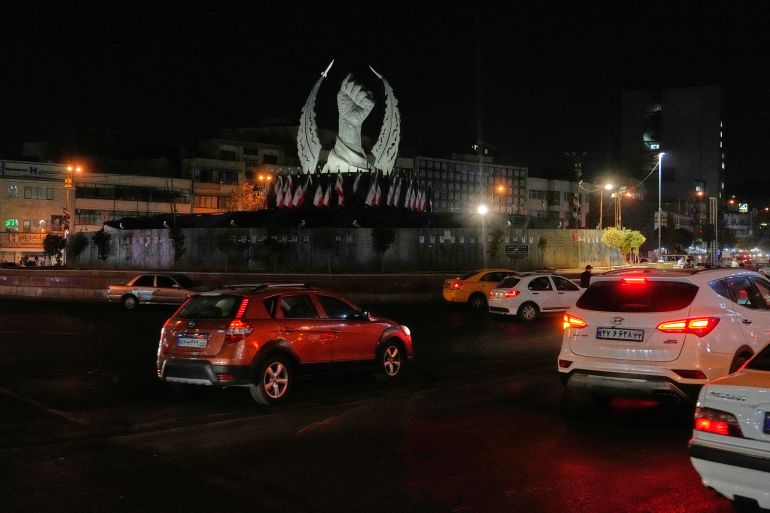
The United States is carrying out its 10th consecutive night of attacks against Iran, with Iranian media reporting explosions in Sirik, Bandar Abbas, Qeshm Island, and Isfahan.
US Central Command (CENTCOM) announced the operation on Monday evening, claiming that the strikes are “designed to further degrade Iranian military capabilities used to attack commercial shipping in the Strait of Hormuz”.
The Islamic Revolutionary Guard Corps (IRGC) issued a statement claiming to have retaliated by launching ground-to-ground missiles at “US HIMARS missile systems” stationed at Camp Arifjan in Kuwait.
Recommended Stories
list of 3 itemsend of list
Two Greek-owned oil tankers in the Strait of Hormuz were struck earlier on Monday, while the United Kingdom Maritime Trade Operations, which monitors attacks on ships, reports that another tanker has been hit off the coast of Oman’s port city of Limah.
Shortly before the night’s bombing began, US President Donald Trump took to social media to warn that Iranian attacks on US military personnel would be paid back “many times over”. On Friday, two US soldiers were killed, and a third was reported missing when an Iranian missile struck a military site in Jordan, while another US service member was killed in northern Iraq.
Trump also reiterated earlier warnings that continued Iranian attacks on commercial vessels in the Strait of Hormuz would be met with a stronger response.
Meanwhile, Yemen’s pro-Iranian Houthis have declared a blockade on Saudi Arabia, escalating tensions and sparking fears that the Yemeni conflict, which had been relatively quiet for four years, may be about to reignite and threaten shipping in the Red Sea.